




We use cookies to optimize your experience, analyze traffic, and personalize ads. Please choose whether you accept our use of non-essential cookies. Read More
For your team

For marketing and sales teams:
Convert more leads in less time with smart automations.

For AI and automation data teams
that amplify the impact of your data team.

For HR teams:
Free HR from operational tasks with intelligent automation.

For finance teams:
Automation that increases accuracy and financial efficiency.

For security teams:
Data intelligence that strengthens your security team and accelerates responses.
Migrate to Skyone


AWS to Skyone:
Migrate AWS workloads with zero downtime and automatic optimization.

Azure to Skyone:
Make better use of your Microsoft licenses with an Azure migration.

On-premises solutions for Skyone:
Modernize your infrastructure and focus on growth.

GCP for Skyone:
Migrate to Google Cloud with a focus on data and AI.

SAP for Skyone:
Skyone leads in the migration and management of SAP environments.
Featured products

Autosky:
Migrate to the cloud without interrupting operations, optimize costs, and scale.

Studio:
Integrate data, eliminate silos, and create the ideal foundation for scaling AI and automation. Low-code platform for orchestrating data, AI agents, and intelligent workflows.

SOC/SIEM
24/7 monitoring with proactive threat detection. Rapid incident response for protection.

Inference Server:
Optimized infrastructure for running AI models and LLMs in production. Ensures performance and scalability.

Cloud Connect:
Direct and secure connectivity between on-premise and cloud environments. Simplifies architecture management.

Threat analysis:
Ongoing assessment of the attack surface and risk exposure. Prioritize vulnerabilities based on...

Cloud Server:
Dedicated multi-cloud infrastructure for mission-critical applications. Stable and scalable foundation for modernization.

Vertical AI:
Expert agents to solve real problems for your business.
Ecosystem and Collaboration

Through Skyone's integration gateway, Inovage Group delivers projects

Catupiry,
with 113 years of history, is an iconic brand in the food sector.

Asun Supermarkets:
Cloud computing with Skyone enables Asun Supermarkets to streamline its processes.
Nortis:
The adoption of EDR was a game-changer for the Nortis Group, understand why.

Software Developers (ISVs):
Your innovation deserves the best infrastructure.

VAR:
Total control and guaranteed profitability.

Franchisees
receive training, marketing, and technical support.

Representatives (Finders)
turn referrals into recurring revenue.

Consulting firms and integrators
: Boost your data and AI deliverables.

Blog
articles, insights, and news about AI, data, automation, and cloud computing to keep you up-to-date.

Whitepapers:
Technical and strategic materials to deepen knowledge and support decision-making.

Skycast:
Listen to our podcasts covering a wide range of topics from the world of technology.

Community
Podcast featuring interviews, tips, and trends for technology leaders and professionals.
Events,
webinars, workshops, and conferences to expand your network, knowledge, and professional development.


InfoMoney
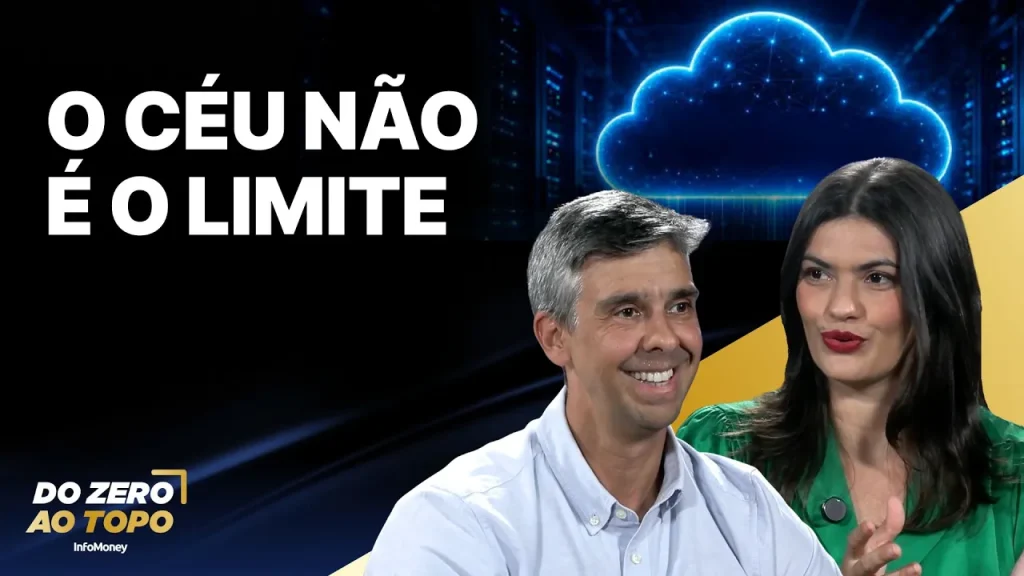
From PowerPoint presentations to R$600 million: Skyone's journey without relying on fundraising
From the first failed attempt to the Advent check, Skyone built governance and raised capital in each round with a clear purpose. Ricardo Brandão was 32 years old, had a son and a pregnant wife when he decided to leave his partnership in a stable company to start Skyone. “If I don’t do it now, when will I […]”
From the first failed attempt to the Advent check, Skyone built governance and raised capital in each round with a clear purpose.
Ricardo Brandão was 32 years old, had a son, and his wife was pregnant when he decided to leave his partnership in a stable company to start Skyone. "If I don't do it now, when will I do it?" he thought.
The decision wasn't made alone. "You don't start a business alone, you start one with the whole family. It was a risk that was largely shared within the family," he says in an interview on the podcast Do Zero ao Topo, hosted by Mariana Amaro.
The logic of sharing risks, preparing the ground, and not depending on the next step to survive would also end up shaping Skyone's fundraising strategy. The company tried to attract investors from the beginning, but continued to grow with its own capital when the money didn't come.
Later, the funding rounds began to have defined objectives, such as internationalization, reorganization of processes and governance, and liquidity for previous investors.
Founded in 2013 to help companies migrate their systems to the cloud, Skyone has reached R$600 million in revenue, a presence in 35 countries, and 500 employees.
Skyone started with no revenue, but already had advice
The preparation for growth began even before Skyone had a product or revenue.
From its first month of operation, the company already had a board of directors.
“We would meet with external advisors to discuss the project,” Ricardo says. “We mixed strategy and tactics.”
This concern with being prepared for different scenarios has gained a name within the company: optionality.
"We wanted to be ready for various things that might happen," he says. "When the opportunity arises, you can seize it."
This logic would be tested early on, precisely in the search for capital.
Skyone has been trying to raise investment since the beginning, when it only had a PowerPoint presentation and no products running.
He couldn't.
The Brazilian venture capital market in 2013 was nascent. There were few funds, and most sought companies that already had a product on the market and paying customers.
Skyone's response was to continue growing using its own resources.
"We were quite aware that we didn't need that money," says Ricardo.
The company progressed until it reached R$ 300,000 in recurring monthly revenue, a level that Ricardo calls product-market fit.
From then on, the relationship with investors began to change.
Skyone's first external investor came from within the family.
Almost a year after its founding, Ricardo's father-in-law contributed R$ 500,000.
He remained in the society for 12 years and left in the final round.
"It was a win-win situation; he trusted the business and made a good profit. That makes me very calm and proud," he says.
The first fund entered the market in 2018.
The venture capital firm Invest Tec raised approximately R$ 20 million in funding at a time when the investor's needs and the company's situation aligned.
The fund needed to complete its final allocation and was looking for a B2B company with approximately R$10 million in recurring revenue. Skyone fit that profile perfectly—and was well-organized.
"The horse passed by, and we climbed on it," he says.
Skyone's fundraising strategy began to follow a logical pattern: each investment cycle should have a clear purpose.
This philosophy would be tested again in March 2020.
The company had a new term sheet signed when the pandemic hit. The fund backed out.
"We went back inside the house," Ricardo says.
At the same time, the business benefited from isolation. Companies needed to migrate to the cloud overnight.
But being passed over by an investor hampered new fundraising talks. Skyone decided to wait and accelerate with its own capital.
In 2021, it raised R$ 45 million with Inovabra, Bradesco's innovation arm. The money had a specific purpose: internationalization.
"Each investment cycle comes with a very clear purpose," says the co-founder of Skyone.
In 2024, it was Bewater's turn, with R$ 60 million.
In this case, the goal was to reorganize internal processes and governance to prepare the company to receive a larger fund.
In 2026, Advent came in, with a larger check and another specific feature: to provide liquidity to the previous funds that wanted to exit.
"We've already been recycling this capital," says Ricardo.
He says the next three to four years have a defined horizon.
The concern with preparing ahead of need is also reflected in Skyone's corporate structure.
The shareholders' agreement has been in place since the company's founding, when it was still comprised of the four original individuals.
The document already outlined vesting procedures, decision-making quorums, and what would happen if a partner stopped working for the company.
"The company cannot stop because of a disagreement," he says.
The entry of funds required new governance adjustments with each round. Some investors gained more decision-making power on a daily basis; others, less.
“There are two groups: the investors group and the founders group. It’s quite well-organized between them all and it works,” he says. “There’s no need to reinvent the wheel — we just use best practices.”
This trajectory helps explain why Skyone doesn't treat fundraising as an end in itself. Capital appears as an instrument for a specific stage: internationalization, company reorganization, or allowing previous investors to exit.
It's a logic that dates back to the company's early months, when there was no product or revenue, but a board of directors already existed.
At Skyone, it has earned the name of optionality: being prepared before the opportunity arises.
To learn more about Skyone's success and strategy, watch the full episode on Do Zero ao Topo. The program is available as a video on YouTube and as a podcast on major streaming platforms such as Apple Podcasts, Spotify, Deezer, Spreaker, Castbox and Amazon Music.

Start Your Digital Transformation Today
Transform Your Business with Skyone. Request a demo or schedule a call with our experts to discover how Skyone can accelerate your digital strategy.