



For your team


Migrate to Skyone


Featured products


Ecosystem and collaboration








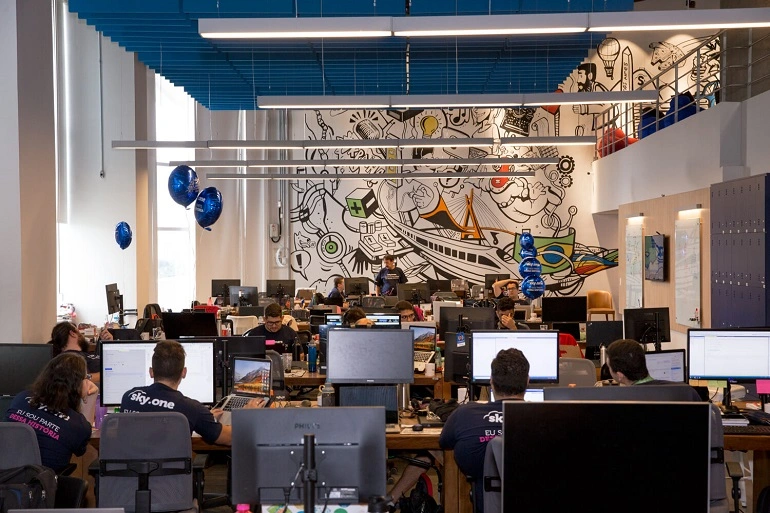
How can retailers save money on their IT infrastructure?
Product acquisition today is a much broader and more detailed process than before. Beyond price and brand, the evaluation of company services is also taken into consideration. For supermarkets and any other retail business, this is no different, and in this context, having a good IT infrastructure and efficient service management from the technology team becomes essential to stand out from the competition.
Ultimately, digital evolution in the market as a whole has changed the dynamics of product and service consumption. In the retail context, it has broadened access to more customers in the digital environment and brought innovation to the way products are displayed at the point of sale. As a result, maintaining functional production and logistics in a supermarket chain generates considerable daily effort from IT professionals, who deal with controlling flows, various distinct systems, and data sources that are not always connected.
This article will discuss the importance of IT service management in supermarkets and other retail businesses, evaluating costs and ways in which technology can contribute to facilitating this process, maintaining its quality, and increasing business performance.
Enjoy your reading!
IT infrastructure management in retail
Today's consumer profile is that of a hyper-connected customer. In other words, people's daily consumption habits in much of the world include internet access, the use of mobile devices and applications, which often need to be connected to other sales channels, creating an omnichannel experience. In addition, there are also price comparison services and product review websites, for example.
To address these needs, it's necessary to equip those working in the supermarket retail sector, as well as other segments, to offer customers quick, uncomplicated, intuitive access with good communication . The focus is on the customer experience!
However, the efficiency of IT service and infrastructure management behind all of this includes large teams and systems, and many other factors to ensure operational efficiency in the face of all this complexity.
Some of the key points of attention for retail IT include:
1) Channel integration (Omnichannel)
The goal of omnichannel is to offer a consistent and unified customer experience throughout the entire purchase journey, allowing them to move seamlessly between different channels, each with its own unique selling points.
Depending on the customer's profile, they might research prices digitally and make the purchase in a physical store, for example, or vice versa. Therefore, integrating physical and online stores is a feature that provides greater convenience.
In this context, the infrastructure must be constantly improved to avoid bugs or problems in transactions , preventing the consumer from having a bad experience, as would be the case, for example, of a purchase that was made virtually, but where the respective product is no longer available in the physical store.
2) Payment methods
And when it comes time to pay, the more options available, the greater the chances of pleasing the customer in your supermarket.
Innovation in payment methods ensures greater security for the consumer , with the use of apps and purchases via credit and debit cards, or even Pix (Brazil's instant payment system). All of this provides convenience to the customer, who can choose the payment method that best suits them.
Digital payments made by contactless mobile phone, use of banking apps and digital wallets, smartwatches with apps, QR code payments, camera payments, or automatic transactions are trends that are gaining increasing traction.
3) Information security
Today, the retail sector is one of the most affected by cyberattacks and data breaches, accounting for 35%. The data, published by the Security Report , refers to 2023, but companies have been suffering from hacker attacks for some time now. In 2020, a Swedish supermarket chain had to close nearly 800 of its stores after a cyberattack paralyzed its cash registers.
However, you shouldn't feel any less reassured just because the cyberattack occurred abroad. According to IDC data from 2022, IT security is the number one priority for IT executives in Brazil, according to 53.6% of companies.
The research shows that, from small to large business owners, everyone is being targeted by hackers, especially those who do not yet have active data security practices in their business.
Is it possible to reduce IT infrastructure costs without sacrificing process quality?
Given all this complexity, there are indeed resources and technologies that allow you to reduce IT infrastructure costs without sacrificing quality! IT service and infrastructure management resources are essential for small, medium, and large retail business owners looking to grow even more and bring security to their services.
Below are the main points to consider when seeking cost savings in IT infrastructure:
1) Invest in digital transformation
As we have previously mentioned, the retail sector is one of the most affected, not only in Brazil but worldwide. Research conducted by the Brazilian Society of Retail and Consumption (SBVC) shows that the supermarket retail sector has been one of the most affected by theft, robbery, and operational losses, with almost 2% of revenue falling, and poor management of resources focused on security is the main reason .
As a solution, many managers have adopted automated management systems to gain more control over all stages of sales production and even improve customer relations. Research shows that this type of innovation, integrating diverse areas with real-time information, can generate savings of over 80% for those working in retail .
2) Process automation
It is a process that relieves employees of excessive focus on production tasks and ensures improved production time, greater agility, and technological control.
Tools such as inventory and cash flow control, for example, can accelerate your company's processes without requiring large investments and bring several day-to-day benefits, such as:
- centralize company information;
- minimize service failures;
- Reduce spending on IT infrastructure and staff.
3) Optimization of IT services
Typically, supermarkets that opt for outsourcing services to optimize their operations achieve high-quality results because they have control over actions aligned with the specific needs of their business.
The logic is that a group of external experts can streamline many internal processes without the need to replace the internal team, which will then be 100% focused on more strategic demands.
Furthermore, most operational processes are handled by the partner, allowing your internal team's resources and time to be directed towards the most essential areas of the business.
4) Migration to the cloud
Large retail chains that choose to migrate their IT infrastructure to the cloud eliminate the daily need for downloads, manual backups, installations, maintenance, and updates of software and hardware on their premises .
Furthermore, the cloud is now one of the most secure solutions for storing sensitive business information, generating greater cyber resilience.
Cloud computing is not new, but it gained even more visibility during the pandemic, as the need to establish social isolation to stop the spread of the virus made it one of the technologies that allowed many businesses to continue operating.
According to a study by Gartner, published in 2021, 85% of companies are expected to be using cloud computing by 2025. Currently, with the rise of Artificial Intelligence, the cloud is becoming an even more necessary resource, and it aligns with the growth in the adoption of this technology.
Artificial Intelligence resources, especially Generative AI, experienced exponential growth in 2023. In fact, a recent study by Google Cloud and IDC showed that 82% of technology executives feel pressured to implement new technological solutions in the companies where they work. Among the priorities are Cloud Computing, AI, and Machine Learning solutions.
The impact of the cloud on the economy and efficiency of retail companies
Agility – Having IT infrastructure in the cloud accelerates access to and sharing of files, with efficient search mechanisms, good cybersecurity practices, and effective support from cloud specialists.
Security – cloud-based data systems are controlled by encryption and firewalls that prevent unauthorized access, enabling secure IT service management for both the company and the client.
Support – being cloud-based, the system can undergo online maintenance, eliminating the need to hire a dedicated IT team for this purpose.
Update – the system, integrated with other media, is constantly undergoing improvements to enhance user access and ensure greater competitiveness in the market.
Cloud Computing with Skyone: a solution to bring cost predictability and optimize IT infrastructure to keep pace with retail
The purpose of the tool is to boost market innovation and transform the use of information technologies, reducing costs through projects planned specifically for each company.
Furthermore, with Skyone you eliminate unused resources. This mechanism ensures the best use of the cloud, reducing costs compared to static deployments .
With a complete cloud-based service, the Skyone platform offers various solutions to meet your company's needs. These include:
- Skyone Autosky: Migrate and manage software to the cloud with a complete infrastructure that optimizes your resources and financial costs.
- Cloud Servers: Migrate and manage servers to the cloud with a specialized, strategic extension of your IT infrastructure.
- Cloud Databases: Migrate and manage databases to the cloud and increase your team's productivity once and for all.
- Advanced Backup: Customize your company's backups how and when you want, gaining greater flexibility and autonomy.
We invite you to learn about one of Skyone's most recent success stories with Asun Supermarkets, in which the IT Manager and DPO of the retail chain details their process of migrating to the cloud and managing their environment with Skyone. He also mentions that the platform allowed Asun to accelerate some internal processes by up to 75%.
If, like Asun, you want to take the first step towards saving money and optimizing the management of your retail IT infrastructure, don't waste any time and talk to one of our specialists !

Start transforming your company
Test the platform or schedule a conversation with our experts to understand how Skyone can accelerate your digital strategy.