




We use cookies to optimize your experience, analyze traffic, and personalize ads. Please choose whether you accept our use of non-essential cookies. Read More
For your team

For marketing and sales teams:
Convert more leads in less time with smart automations.

For AI and automation data teams
that amplify the impact of your data team.

For HR teams:
Free HR from operational tasks with intelligent automation.

For finance teams:
Automation that increases accuracy and financial efficiency.

For security teams:
Data intelligence that strengthens your security team and accelerates responses.
Migrate to Skyone


AWS to Skyone:
Migrate AWS workloads with zero downtime and automatic optimization.

Azure to Skyone:
Make better use of your Microsoft licenses with an Azure migration.

On-premises solutions for Skyone:
Modernize your infrastructure and focus on growth.

GCP for Skyone:
Migrate to Google Cloud with a focus on data and AI.

SAP for Skyone:
Skyone leads in the migration and management of SAP environments.
Featured products

Autosky:
Migrate to the cloud without interrupting operations, optimize costs, and scale.

Studio:
Integrate data, eliminate silos, and create the ideal foundation for scaling AI and automation. Low-code platform for orchestrating data, AI agents, and intelligent workflows.

SOC/SIEM
24/7 monitoring with proactive threat detection. Rapid incident response for protection.

Inference Server:
Optimized infrastructure for running AI models and LLMs in production. Ensures performance and scalability.

Cloud Connect:
Direct and secure connectivity between on-premise and cloud environments. Simplifies architecture management.

Threat analysis:
Ongoing assessment of the attack surface and risk exposure. Prioritize vulnerabilities based on...

Cloud Server:
Dedicated multi-cloud infrastructure for mission-critical applications. Stable and scalable foundation for modernization.

Vertical AI:
Expert agents to solve real problems for your business.
Ecosystem and Collaboration

Through Skyone's integration gateway, Inovage Group delivers projects

Catupiry,
with 113 years of history, is an iconic brand in the food sector.

Asun Supermarkets:
Cloud computing with Skyone enables Asun Supermarkets to streamline its processes.

Nortis:
The adoption of EDR was a game-changer for the Nortis Group, understand why.

Software Developers (ISVs):
Your innovation deserves the best infrastructure.

VAR:
Total control and guaranteed profitability.

Franchisees
receive training, marketing, and technical support.

Representatives (Finders)
turn referrals into recurring revenue.

Consulting firms and integrators
: Boost your data and AI deliverables.

Blog
articles, insights, and news about AI, data, automation, and cloud computing to keep you up-to-date.

Whitepapers:
Technical and strategic materials to deepen knowledge and support decision-making.

Skycast:
Listen to our podcasts covering a wide range of topics from the world of technology.

Community
Podcast featuring interviews, tips, and trends for technology leaders and professionals.
Events,
webinars, workshops, and conferences to expand your network, knowledge, and professional development.


Digital Convergence
In the age of AI, response time has become the primary cybersecurity risk
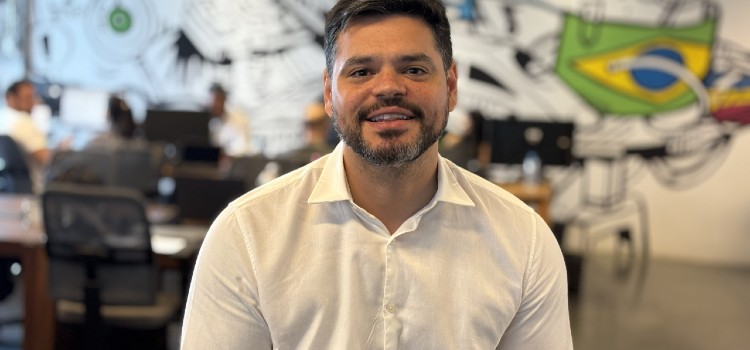
By Bruno Caldas – Security Director at Skyone Cybersecurity is undergoing a structural change: in the age of AI, response time has ceased to be an operational indicator and has become the main risk factor for companies. Attacks are already conducted automatically and operate at machine speed. In […]
By Bruno Caldas – Security Director at Skyone
Cybersecurity is undergoing a structural change: in the age of AI, response time has ceased to be an operational indicator and has become the main risk factor for companies.
Attacks are already being conducted in an automated way and operating at machine speed. In more advanced scenarios, data revealed that the time between initial access and total compromise collapsed from hours to an impressive 22 seconds – drastically reducing companies' reaction window.
On the other hand, the response follows a different rhythm. Many organizations take weeks or months to identify and contain incidents, which amplifies the impact and transforms isolated failures into operational crises.
This mismatch creates a critical asymmetry: attacks happen in seconds, while the reaction is still slow, fragmented, and dependent on processes that were not designed for this level of speed.
Part of this change is directly linked to artificial intelligence. What was once a support tool is now actively involved in the detection, analysis, and execution of real-time responses. In practice, both attack and defense already operate with automation and scale.
But there's a factor that exacerbates this scenario. The corporate environment is no longer composed solely of human users. Autonomous agents, API integrations, and decentralized automation have become part of daily operations, often without visibility or centralized control. The first challenge, therefore, is basic but still neglected in many companies: understanding what is already running within the environment.
The risk is no longer just in the use of technology, but in its lack of governance. The proliferation of autonomous agents – often created outside of technology fields – expands the attack surface and introduces a new type of vulnerability: systems that make decisions without adequate oversight.
This changes the logic of security. The challenge is no longer just protecting systems, but governing digital entities that operate within the organization. This requires an approach based on identity, traceability, and clear boundaries of action.
In this scenario, non-human identities cease to be the exception and begin to dominate the digital environment. APIs, tokens, and AI agents become critical control points, replacing the old network perimeter as the main focus of security attention.
At the same time, the defense architecture itself needs to evolve. The accumulation of disconnected tools reduces visibility and increases response time, transforming complexity into an additional risk. In cybersecurity, too much complexity is not sophistication. It's a vulnerability.
This challenge also extends beyond the company's own boundaries. In an increasingly SaaS and integration-based environment, responsiveness depends on how quickly suppliers and partners can adapt to new threats.
Cybersecurity is no longer just a technical issue. Today, its impacts directly affect the operations, reputation, and bottom line of companies.
In an environment where attacks happen in seconds, security becomes essentially a matter of coordination. They don't respect organizational charts, boundaries between areas or economic sectors. The response also cannot depend on silos.
The competitive advantage no longer lies in having more technology, but in being able to respond faster – with governance, clarity, and the capacity for continuous adaptation.

Start Your Digital Transformation Today
Transform Your Business with Skyone. Request a demo or schedule a call with our experts to discover how Skyone can accelerate your digital strategy.