



For your team


Migrate to Skyone


Featured products


Ecosystem and Collaboration








IT investments continue to grow in the post-pandemic era
Accelerated by the pandemic, the pace of growth and new launches should continue in the coming years, as should investor interest in the sector
The information technology (IT) sector is expected to remain a focus for investors in the post-pandemic period. The outlook is for the pace of development, deployment, and consumption of IT solutions to remain steady, driving increased investment in new product development and delivering better results for companies.
Invest Tech , a pioneer in investing in IT companies focused on business solutions, operating since 2008, is a clear example of this movement. According to the fund's Private Equity director, Wagner Araújo, companies' investments in process innovation, talent development, and improved customer experience are only just beginning. This is a market that has reached US$4 billion in Latin America , with US$2.4 billion in Brazil alone , according to LAVCA . "Due to the diversification of our portfolio, we are monitoring the adoption of technologies and expect continued growth in investments in technology and services by companies," he states.
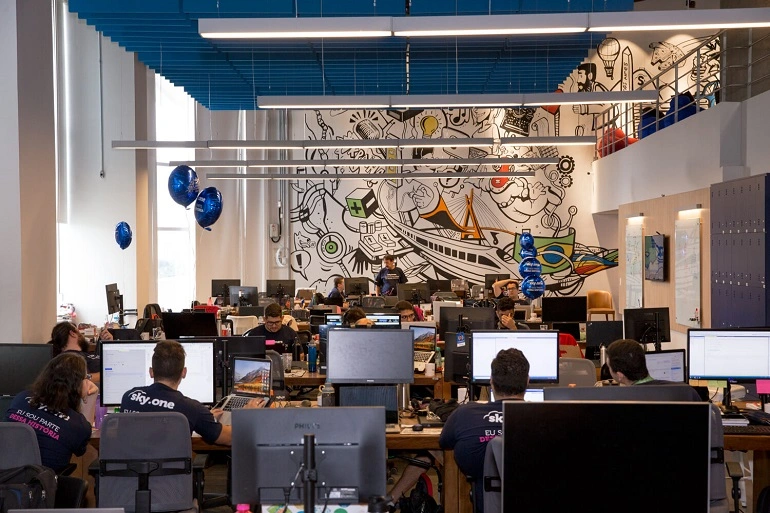
The forecast takes into account companies that use technology as a critical factor for process improvement, efficiency in people management, and enhancing their customer experience. One example is Sky.One , which specializes in solutions for hundreds of software development companies in Brazil and abroad, simplifying the migration of applications to the cloud. The company's CEO, Ricardo Brandão, explains that the consolidation of remote work, brought about by the pandemic, has greatly contributed to business growth in recent months.
He sees this process as only in its beginning and predicts that its evolution will demand more from its products and services. “The first move was migration to the cloud, and there are still many companies on that path. But soon we will see the next move, which is the modernization of applications, which should be based on an innovation ecosystem guided by how companies relate to their customers,” he predicts.
In this new scenario, Brandão is directing Sky.One's solutions to meet the need for integration of multiple products with ERPs and the increased adoption of data usage by its clients. "The need for greater integration of different products opens up the possibility of building and offering new solutions for software development companies to meet the demands of their clients. This should encompass various verticals, such as the financial sector, retail, and industry, all based on systems integration, efficient cloud management, and new technologies such as artificial intelligence and information security," he says.
Customer focus
The relationship between companies and their customers is also on Quality Software . According to the company's president, Júlio Brito, the disruption of physical contact with customers, employees, and suppliers created by the pandemic brought the realization that companies must offer their customers the same experience online and offline. Following a similar evolution to that highlighted by Brandão, Brito states that during the pandemic there was a very strong acceleration in solutions related to the client's business (front end), exemplified by the accelerated growth of e-commerce in Brazil.
“The creation and development of a better digital connection and customer experience have been a major target of the acceleration of investments in technology and services that we have experienced in recent months, and this acceleration creates a set of demands for infrastructure and technology services to meet this growth. This requires greater efficiency in the architecture of IT team management and the application of new technologies, allowing their structure to adjust as quickly as necessary,” he states, noting that the “gold rush” should focus on improving the use of technologies that emerged more than a decade ago.
“We are talking about technologies that arrived on the market in the early 2000s and that took a long time to become widely used, only recently beginning to show the potential for synergies when used together,” he suggests. It is in this context that Quality must increasingly help companies define the experience they want to give their end customers and, from there, which technologies and structures allow them to put this into practice.
“The education and healthcare sectors are examples of this change, with the use of technologies such as virtual reality, facial recognition, and personalization, which are only at the beginning of their value-adding potential. The challenge going forward is the integration of the physical and online worlds, through the speed of offers and connectivity of users across multiple channels (Omnichannel), ensuring the same experience at any point of contact. This is where the next five or ten years of investment will be,” he believes.
With the same vision of accelerating investments in technology, but focusing on people management, Ahgora Sistemas , which has more than 3,500 corporate clients, found itself in the eye of the storm caused by remote work and the need for efficient solutions to manage it. The company's CEO, Lázaro Malta, recalls that in March of last year, one day before the start of the lockdown, they launched the Anywhere Office , which includes employees working remotely on a single management platform and was widely used by their clients. "The timing was perfect," he comments.
For Malta, the post-pandemic period will be marked by the continued pace of migration to the cloud and how the entire technological ecosystem must prepare for it. "There is still a huge legacy of infrastructure and technology, and this will pose a challenge for new functionalities and innovations, which are demanded by the growth of collaborative work inside and outside companies, including greater assertiveness and legal security in the management of people and processes," he says.
From a human resources management perspective, companies face increasing challenges in employee health and safety, measuring individual and collective performance, as well as training and engaging talent. "New and more efficient training tools and communication of purpose that strengthen cultures will be necessary. We are talking about a new work model, and management has to reinvent itself," he states.
Considering this context, the company has been working on solutions that bring a new perspective to workforce management, incorporating tools that take into account decision-making empowerment, the flexibility of remote work, and the strengthening of culture. All of this is based on real -time . “The new demand from human resources managers is for tools that analyze information in real time, because events and changes occur very quickly. This information is what allows a company to be run efficiently. This is especially true for companies with employees spread across different locations. Traditional Business Intelligence reports are no longer sufficient; it is necessary to look at the immediate present and the immediate future. These tools will be mandatory for successful companies in the near future,” he predicts.
Where the news was published:
Source: https://www.datacenterdynamics.com/br/not%C3%ADcias/investimentos-em-ti-continuam-crescendo-no-p%C3%B3s-pandemia/


Start transforming your company
Test the platform or schedule a conversation with our experts to understand how Skyone can accelerate your digital strategy.