



For your team


Migrate to Skyone


Featured products


Ecosystem and Collaboration







Felipe Wasserman presents Content Hub and reinforces the role of education in preparing professionals for the AI era
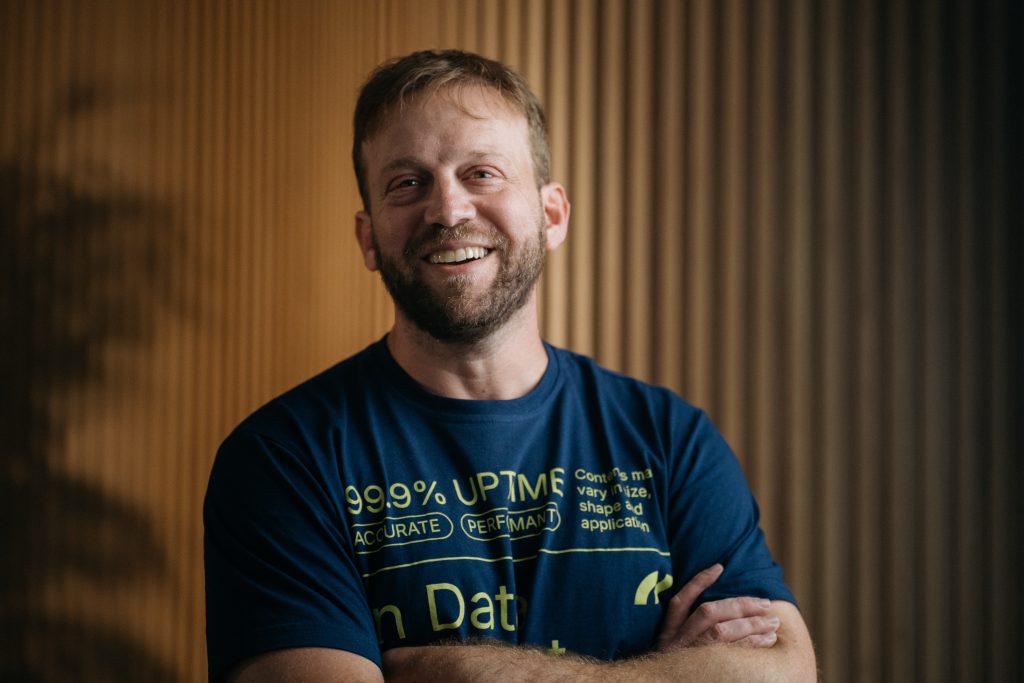
Skyone's Marketing and Growth Director, Felipe Wasserman, leads an agenda that combines three pillars considered essential for modern companies and professionals: technology, education, and market training, especially regarding the world of Artificial Intelligence (AI) and the versatility of cloud storage systems.
The executive leads an initiative that reflects a clear diagnosis of the industry's current state. The rapid advancement of AI has created a gap between the potential of the tools and the actual ability of professionals and companies to use this resource strategically.
This understanding is at the origin of the Content Hub, a content platform created by Skyone to broaden access to practical knowledge on topics crucial to the daily operations of businesses.
The proposal stems from the observation that a large portion of organizations still operate with a superficial understanding of these tools, creating an increasingly evident competitive bottleneck in the market. “The topic of artificial intelligence is much bigger than people imagine. Many say they work with AI, but in practice they only use very basic functions. The more you learn, the more you realize how much there is still to discover,” says the executive, in an interview with Mundo do Marketing.
Strategic use of technology
Technological advancements open up multiple possible paths, from more intensive applications of artificial intelligence to new integrations between automation, data, and consumer experience. Therefore, knowledge development becomes a central element for market evolution.
The discussion about technology is no longer just about access to tools; it has come to involve the ability to interpret and use them strategically. Companies that do not invest in training tend to lose competitiveness in a scenario increasingly driven by data, automation, and new forms of decision-making.
“It’s no use having the best technology if people don’t know how to use it. The difference between companies that invest in training and those that don’t will become increasingly visible in the coming years,” warns Wasserman.
Skyone's initiative stems from a specific vision regarding the role of technology companies in the current digital transformation cycle. Wasserman defines organizations like the one he leads as "intermediary companies," responsible for helping other companies structure their operations for different future scenarios.
“Technology opens up many possible futures. It could be artificial intelligence, automation, the internet of things, or other applications that are still emerging. Regardless of which path consolidates, there is an intermediate stage of learning and structuring. It is precisely in this space that we want to operate,” explains the Director.
The scope of the Content Hub
The Content Hub emerges as the practical embodiment of this strategy. Structured by Skyone as a content and education ecosystem, the platform was created to broaden access to knowledge about technology, artificial intelligence, and digital transformation, while simultaneously positioning the company as an active player in the debate about the sector's future.
This initiative directly aligns with Wasserman's vision regarding the role of technology companies in the current digital transformation cycle. The executive explains that organizations like Skyone function as "intermediary companies," responsible for helping other companies structure their operations and develop capabilities that allow them to navigate different possible technological scenarios.
Expanding access to knowledge becomes an essential part of this market preparation process. The hub's architecture was designed precisely to address a recurring challenge in this process: the dissemination of technological knowledge does not occur homogeneously within organizations. Young professionals at the beginning of their careers, developers, technology executives, and business leaders face distinct challenges and require specific approaches in terms of language and depth.
To cater to this diverse audience, the Content Hub brings together a series of programs with complementary focuses. These include Low Code, aimed at introducing automation technologies to beginners; RecruTech, dedicated to career guidance in the technology sector; Builders, focused on technical training; TrendOff, centered on market trends and technological leadership; and Elas in Tech, an initiative that discusses diversity and female leadership in the sector.
“We are talking about the same technological universe, but for completely different audiences. A young person starting their career needs a different language than that used with a CEO or a technical developer,” explains Wasserman.
The podcast was chosen as the primary distribution format because it allows for recurring and in-depth exploration of topics over time. However, the initiative is not limited to audio and also extends to video, blogs, and other digital platforms, broadening the reach and scope of the content.
In parallel, Content Hub began functioning as a relationship-building tool within the technology and innovation ecosystem. The more open format of the conversations fosters exchanges that rarely occur in traditional commercial environments, stimulating reflection and connections that can generate new perspectives on the challenges facing the sector.
“The podcast creates an environment for exchange. In a formal meeting, everyone tends to defend their position. In a more open conversation, ideas and connections emerge that often wouldn't appear in another context,” says the executive.
The professional of the future
The discussion about technology inevitably leads to a reflection on the professional profile needed for the coming years. Wasserman argues that "the most profound transformation lies not in the tools available, but in the change in the logic of learning.".
For decades, the education system was based on the ability to memorize information and provide correct answers. With the spread of artificial intelligence, this model is losing relevance, as access to answers has become instantaneous.
“Today you can obtain virtually any information in seconds. This completely changes the definition of intelligence. The differentiating factor is no longer knowing the answer, but asking better questions and finding different paths,” he emphasizes.
In this scenario, skills such as creativity, context interpretation, and the ability to see opportunities outside traditional patterns tend to gain prominence. At the same time, the executive observes a growing phenomenon of standardization of strategies and visual identities in the market, driven by the massive use of the same digital tools.
“We are living in a time of homogenization. Many brands use the same tools and end up producing very similar communications. The differentiating factor will emerge precisely from those who manage to escape this pattern,” adds the executive.
Technology, everyday life, and the integration of worlds
Wasserman's professional trajectory spans different cycles of technological transformation, from the popularization of the personal computer to the advancement of social networks and artificial intelligence. Observing this history, he projects that the next "great technological leap" should occur in the total integration between the online and offline worlds.
In the executive's view, the future doesn't necessarily lie in creating entirely virtual universes, but in incorporating technology into everyday experiences in an increasingly natural way. This integration is likely to impact everything from retail to entertainment, altering how consumers interact with brands, products, and services.
“The big change will happen when the online world is completely integrated with the physical world. We will be on the street, looking for information, and we will have access to it without needing to pick up our cell phones. Technology will become an invisible part of our routine,” he predicts.


Start transforming your company
Test the platform or schedule a conversation with our experts to understand how Skyone can accelerate your digital strategy.